

~ 13 min read
Thirty years ago, when we launched our first web design agency in London, life was much simpler. The Internet was still in its early days, and many people looked at us strangely when we said we designed and developed websites. Competition was scarce, and we managed to convert the majority of the poorly written proposals we submitted.
Fast forward to 2026, and London is brimming with web design agencies, all claiming creative design, technical skill, and impressive results. On the surface, many of them appear quite similar. Most have a polished website, a portfolio of attractive projects, impressive clients and a list of services that sound broadly the same.
The challenge for London businesses is working out which agency is actually the right fit.
At ID Studio, we believe choosing a web design agency is about how well it understands your business, your audience, your goals, and the role your website plays in your growth.
Many agencies overly focus on one element, often design. At ID Studio, we believe that a good agency should be able to combine strategy, design, development, content thinking, user experience, SEO and long-term support.
Agencies should be able to provide clear evidence of how they work, the benefits to your business, and why their approach makes the most sense.
We’ve narrowed down 12 things we believe are worth looking at before making a decision.
If an agency doesn’t take the time to really understand your business and what you are trying to achieve with your website, the chances of it reaching its full potential are limited.
Before starting any meaningful design or development work, they should ask questions about your business model, target audience, competitors, current website challenges, and what success truly means. This could involve generating higher-quality enquiries, improving search visibility, strengthening your brand, making the site easier to manage internally, or creating clearer, more intuitive user journeys.
At ID Studio, we have found that the most successful website projects almost always start with proper discovery. This stage gives everyone the chance to step back, ask the right questions and define what the website is really there to achieve. Without this step, even a visually impressive website can miss the mark because it has not been built around the right goals, priorities or user needs.
This is also one of the reasons why we feel asking agencies to produce pitch designs before a proper discovery stage rarely works as well as clients hope. On the surface, it can seem like a quick way to compare creative ideas, but in reality, it often forces agencies to jump straight to visuals without the strategic understanding needed to make those ideas meaningful. The result is usually a pitch design based on assumptions rather than insight. It may look polished, but it is far less likely to reflect what the business actually needs or what users are really looking for.
We understand that some businesses are under pressure and want to move quickly, especially if a website is overdue for replacement or there is an urgent commercial need. In those situations, there can be a temptation to rush discovery or skip parts of it altogether. In our experience, that is also a mistake. The time saved at the beginning of the project is frequently lost in later stages when user testing highlights issues, resulting in revisions that affect design and functionality and are far more time-consuming and costly to address.
Discovery is one of the most important stages of a project, and the agency needs to lay the groundwork to make better, more informed decisions about design, content, development, and SEO.
If an agency is too quick to jump into visuals or pricing without understanding the wider picture, that can be a warning sign.
A professional web design agency should clearly explain how it takes a project from initial discussions to launch, ongoing support, and maintenance. The process should feel organised, transparent, and customised to the project's complexity.
In most cases, this should include stages such as discovery, planning, sitemap development, wireframing, website design, front and back-end development, content population, testing, launch, and post-launch support and maintenance.

A clear process typically results in a smoother project. It helps prevent misunderstandings, minimises scope creep, and ensures important details are not overlooked. It also demonstrates that the agency is experienced in properly managing projects.
For us, process is not about adding unnecessary layers. It is about giving a project a solid foundation so that creative and technical decisions are made for the right reasons.
Most agencies will have a portfolio, but do they have experience in your market?
A strong portfolio should show breadth, consistency, and evidence that the agency can solve a range of problems for a range of businesses. The key question is not simply whether the work looks good. It is whether the agency appears capable of understanding the type of challenge you are bringing to them.
That might mean experience in your sector, with businesses of a similar size, or in delivering the kind of functionality, strategy, or redesign your business needs.
At ID Studio, we showcase hundreds of websites covering most business sectors. Make sure the agency you're considering has experience delivering the type of website you need and can tailor their approach to different audiences, brands, and objectives, rather than using the same visual style for every project.
This is one of the most overlooked areas when comparing agencies.
Many web agencies showcase finished websites, but that only tells part of the story. We were guilty of this, and if you look at our portfolio a year ago, you’ll see they were very visual, with little content or context.
What matters more is why the work was done, what challenges had to be solved and what changed as a result.
Strong case studies should provide a complete overview of the project. They should detail the client’s objectives, the rationale behind the solution, the scope of work, and the subsequent results. When possible, they should also highlight specific improvements, such as better engagement, higher-quality leads, enhanced search performance, or increased conversion rates.
A site can look impressive in screenshots, but without context, it is hard to know whether it actually performed as expected.
This is why we believe outcome-led case studies are much more useful than gallery-style portfolio entries. They help businesses understand how an agency thinks and the value it can deliver.
A recently published case study showcasing a website redesign for Swim Generation exemplifies an outcome-led approach. It includes the design process, the challenges faced, how they were overcome, and the impact and results of the redesign.
A website redesign should not ignore search visibility.
SEO is often treated as something to consider only after the website is live, but many decisions that affect organic performance are made early. Site structure, content hierarchy, internal linking, metadata, redirect planning, technical performance and content migration all need to be considered as part of the build, not as an afterthought.
If an agency focuses only on aesthetics and functionality, the finished site may look better but perform worse in search results. That can lead to lost rankings, visibility, and enquiries.
‘At ID Studio, we see SEO as part of the wider website strategy. Even when a project is primarily design-led, the site still needs to be built on a solid foundation that supports discoverability, usability and long-term growth’.
Neil Kilgallon, Technical Director.
A good London web design agency should understand how design, development and SEO work together.
A beautiful website is not enough if it is difficult to use.
Good web design should take visitors on a journey, helping them find what they need and move them towards meaningful action. That might be making an enquiry or purchase, requesting a quote, booking a consultation, reading key information or exploring services in more detail.
An agency should be thinking about navigation, structure, page flow, calls to action, readability, mobile usability and accessibility, not just visual styling.
When reviewing an agency’s work, it is worth asking yourself whether their websites simply look good or also appear intuitive, focused, and commercially effective.
‘In our view, websites work best when creativity and clarity are combined. Design should support the user journey, not compete with it. A site that is visually striking but confusing to navigate can undermine the very goals it is meant to support’.
Michael Macneil, Creative Director
There is often a big difference between producing attractive visuals and delivering a fully functioning website that performs in the real world.
A good agency should be able to bridge that gap confidently. That means understanding how design decisions affect development, content editing, speed, responsiveness, scalability and future maintenance.
Where design and development are disconnected, compromises often appear later. Features may not work as expected, layouts may have to be simplified, performance may suffer, or the content management experience may become frustrating.
At ID Studio, we work in small teams to ensure a seamless transition between the main stages (planning, design, front-end and back-end development). A dedicated project manager ensures that all team members are involved at every stage of the build process.
This is why it is important to choose an agency that can think beyond the mock-up stage. The strongest results usually come when the design and development teams are aligned from the beginning, and the build is approached with care and creativity.
Take time to review some of the agency's previous websites to ensure they function as well as they look.
Not every business requires the same platform, CMS, or technical setup. ID Studio is platform agnostic, and recommends the best solution once we fully understand your needs, both now and as you grow. Not every agency is the same, and we’ve lost track of how many times clients have approached us to redesign their websites because their backend systems don't meet their requirements.
A reliable web design agency should be willing to recommend the right solution based on your goals, content needs, internal team, budget, and future plans. That recommendation should be shaped by what is right for the project, not by what is easiest for the agency to integrate.
Some websites need a flexible CMS that makes regular updates simple. Others may need more bespoke functionality, eCommerce capabilities, system integrations or stronger performance and security considerations.
At ID Studio, we believe technology decisions should support the wider business strategy. A website should not only meet current needs. It should also give you room to grow and adapt over time.
If an agency promotes a one-size-fits-all solution without adequately explaining why it is suitable, it is worth asking more questions.
A good agency should be upfront about price, scope, timescales and what happens if the brief changes.
That does not mean every project can be priced instantly, but it does mean the agency should be open about what is included, what may affect cost, how long the process is likely to take and what happens if the scope changes.
We prefer to fully understand your requirements and submit a proposal that clearly defines what we will deliver at a fixed cost.
The proposal you receive should clearly outline the stages, deliverables, milestones, and responsibilities involved. There should also be clarity around revisions, testing, content population, post-launch support and any ongoing services.

Transparency in these areas helps build trust and makes the project easier to manage from both sides.
In our experience, the most successful projects are well-defined. Clear conversations around budget, timing and scope are an important part of setting that up properly. If you receive proposals that do not clearly define costs, deliverables and times, alarm bells should start ringing.
A website agency should be able to demonstrate who it is, how it works and why it can be trusted.
That could include case studies, testimonials, reviews, recognisable clients, team profiles, company information, awards, accreditations, thought leadership or evidence of long-term industry experience. These signals help you determine whether the agency is genuinely established and trustworthy or simply good at marketing itself.
When evaluating an agency, it is worth looking closely at its own website. Does it feel trustworthy? Does it explain its services clearly? Does it show real people, real experience and real proof of work?
At ID Studio, we believe trust is established through clarity, consistency, and evidence. A web design agency should demonstrate substance, not merely make promises through generic marketing spiel.

The ID Studio team has supported me through multiple rebrands and major site improvements. They bring a huge amount of both technical and creative expertise. Stepping into a website project can feel daunting, but the team at ID Studio guides you through the process, offering deep expertise and always focusing on a quality end product. They're also great people to work with.
Greg Clarke, mthree

We worked with ID Studio to help with our rebrand from Sports Generation to Swim Generation. Mike, the Creative Director, made the whole experience seamless and thoroughly enjoyable. Mike and his team have created a new website and brand that truly captures our values and how we wish to showcase our services. Our website is now modern and user friendly. We have had an endless amount of compliments from clients and companies about how impressed they are with the new brand and website. Mike has been a pleasure to work with. He guided us and really understood what we were trying to achieve. We are so grateful!
Christopher Whitworth, Swim Generation

We asked ID Studio to create an entirely new website for National Youth Music Theatre and we could not be happier with the result. Mike and his team took the time to understand and appreciate our specific needs and created a stylish and exciting website that reflects our ethos and showcases our work beautifully. It is dynamic, engaging and user friendly. Mike produced the most helpful CMS training videos for us, too, and he continues to respond quickly to any queries we might have. We feel well looked after. I can highly recommend ID.
Chris Cuming, Artistic Director
A new website should not be treated as a finished product the day it goes live. The majority of the websites we launch evolve over time.
Once a site is launched, there are usually ongoing needs around updates, maintenance, bug fixes, performance improvements, content changes, security, monitoring and future enhancements. In many cases, there is also a need for continued SEO support, campaign landing pages, testing or strategic development as the business evolves.
That is why it is worth asking what happens after launch. Will the agency still be there? Can it support the site properly? Does it offer maintenance and ongoing advice, or is the relationship expected to end once the build is complete?
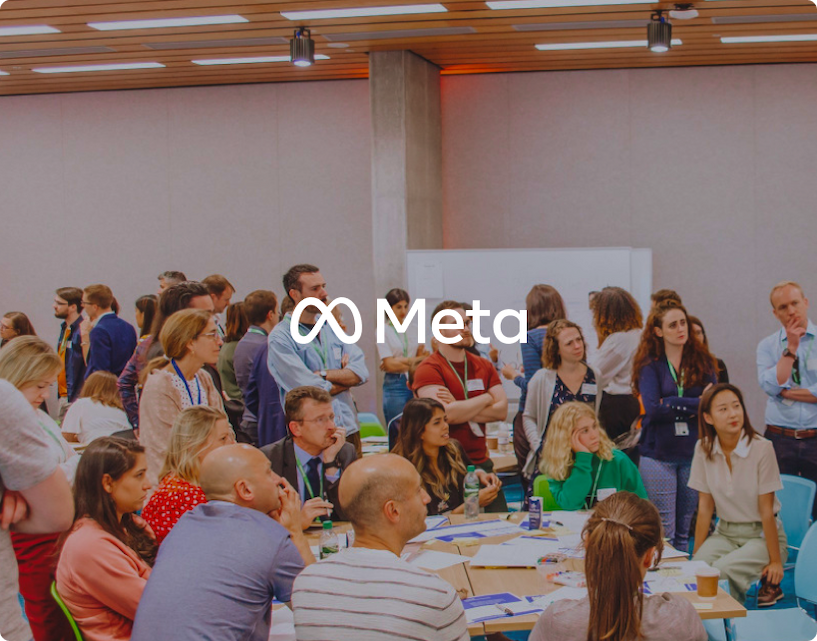
At ID Studio, we see a website launch as an important milestone, not the end of the relationship. Many of our strongest client relationships are long-term because their websites need to evolve alongside their businesses. We’ve worked with Meta, supporting several of their websites for over five years.
Finally, there is the intuition you get when you believe in the people you are dealing with.
A website project is collaborative. It involves ideas, feedback, decisions, deadlines and problem-solving. Even a highly renowned agency may not be the right fit if communication feels difficult, the relationship feels overly transactional, or there is a feeling of unease over something you can’t quite put your finger on.
The right agency should communicate clearly, listen properly and bring thoughtful recommendations to the table. It should also be willing to challenge assumptions where needed and help guide the project in the right direction. At ID Studio, you deal directly with the people responsible for project managing and delivering your website - not a sales team trained to close a deal at any cost.
In our view, the best agency relationships feel like partnerships. The team should understand what you are trying to achieve and genuinely care about helping you get there.
When choosing a web design agency in London, capability matters, but so does trust, communication and fit.
Choosing a web design agency is about much more than comparing prices or picking the one with the most eye-catching portfolio.
The right partner should understand your business, have a clear process, combine design and technical thinking, consider SEO from the outset and show real evidence of credibility and results. It should also build websites that are not only visually strong, but also useful, scalable and aligned with your wider business goals.
At ID Studio, we believe the most effective websites come from a thoughtful combination of strategy, creativity, development expertise and long-term support. If you are reviewing web design agencies in London, it is worth looking beyond surface-level presentation and focusing on the substance underneath. That is often where the real difference lies.
If you would like to speak to someone who would actually be working on your website, rather than a sales team, get in touch and book an initial consultation.
